पत्ती
Interesting Details About Puffins
Have you ever learned about puffins? These lively little seabirds are not only incredibly cute but also full of surprising skills! Even their name has a charming origin: “Puffin” comes from the word “puff,” which means swollen. This is because baby puffins, called pufflings, have a rather chubby, round appearance.
Isabella Ward
लेखक
झलक
नीचे पूरा पाठ फ़्लोट करता है।
शेल्फ़
स्टोरी लीफ़
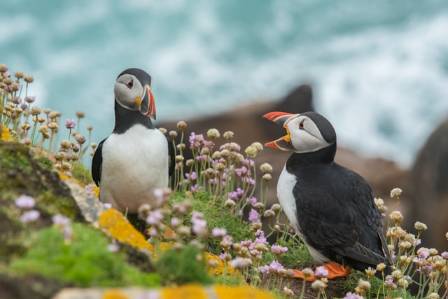
Have you ever learned about puffins? These lively little seabirds are not only incredibly cute but also full of surprising skills! Even their name has a charming origin: “Puffin” comes from the word “puff,” which means swollen. This is because baby puffins, called pufflings, have a rather chubby, round appearance.
From a scientific perspective, there are three species in the Fratercula genus: the horned puffin, the tufted puffin, and the well-known Atlantic puffin. While these so-called “sea parrots” make their home in the general Arctic region, more than half of the world’s puffin population lives in Iceland.
Small bird, big mouth
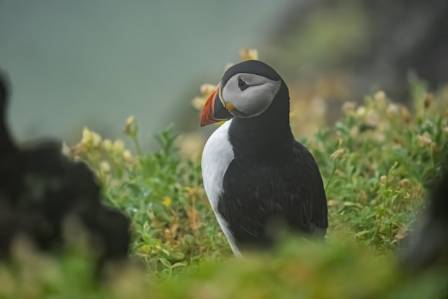
Puffins are definitely birds with many talents, but their eye-catching bright orange beak might be their most impressive feature. For one thing, this beak can change color! Every year, just before winter arrives, puffins shed the outer layer of their beak, leaving it small and dull. It only regains its original orange hue right before spring—perfect timing to impress female puffins during the mating season!
Curious to know more? A puffin’s beak might not be the largest you’ve ever seen, but it can hold an amazing number of fish. In fact, thanks to their special tongues and upper palates, they can carry around twelve fish at once. The puffin’s rough tongue pushes its catch onto a spiky area at the top of its beak, keeping the fish in place while the puffin dives again to catch more of its favorite food: sand eels. There’s even a report of a puffin in Britain setting a record by carrying an incredible 62 fish in one trip! It almost seems like this bird could coach the next eating contest.
Half rabbit, half dog?
Puffins are very unusual seabirds, and they do things differently from many other bird species. A great example? Unlike most birds, which build typical bowl-shaped nests to raise their young, puffins take a different approach. Instead, they mimic rabbits by digging burrows about three feet deep into the ground using their beaks and feet. And in a dog-like fashion, puffin parents scoop out loose dirt and material, then line the back of the burrow with soft grass and feathers to create a cozy nest for their puffling.
Never running out of puff
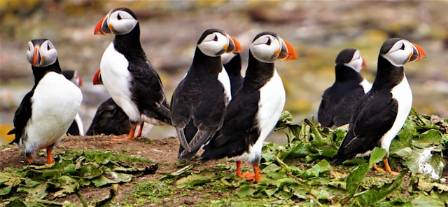
Puffins spend months at a time wandering the open Arctic Ocean! These cute little seabirds only return to the shore once a year, and that’s for the breeding season. During this time, they nest in the burrows they’ve dug on islands free from predators and raise their pufflings.
But how do they survive out at sea for so long? The answer lies in another clever natural adaptation: puffins have special glands behind their eyes that filter excess salt from their blood. This means they don’t depend on freshwater sources, allowing them to stay at sea indefinitely.
Love is in the air
Puffins form long-lasting bonds and are known to be monogamous. This means that once a pair forms, they usually stay together for their entire lives, through good times and bad. However, they migrate on their own and spend the winter months apart from their partners.
Surprisingly, when they return to the shore for the breeding season, puffin pairs always manage to find each other again at the same burrow to nest! Even more surprising—despite flying thousands of miles to reach their isolated breeding areas, puffins only have one puffling per year.
Birds of many talents
Puffins are highly intelligent animals! Scientists have reached this conclusion because they’ve observed “big-brain behaviors” in puffins—behaviors that were previously only seen in primates and elephants. For example, the Atlantic puffin has been spotted using sticks and twigs as tools to scratch itself!
What’s more, puffins are fast fliers, capable of reaching speeds up to 55 miles per hour. So don’t let their resemblance to flightless penguins fool you. With their short wings and stocky bodies, puffins might look a bit clumsy when flying. That’s why they have to work hard, flapping their wings an impressive 400 times per minute to stay in the air.
They don’t just fly in the sky—they also “fly” underwater! Well, sort of. While using their webbed feet to paddle on the water’s surface, puffins flap their wings when diving underwater to move faster as they hunt for fish.
Questionable dinner menu
In the past, when food was scarce in some Arctic regions, puffin meat was a popular dish. Today, though, puffins are protected, and hunting them is illegal in most countries—with the exceptions of Iceland and the Faroe Islands.
Contrary to what many people think, most locals in these areas don’t actually enjoy eating puffin that much. The meat is often described as too gamey for most people’s taste! Eating puffin is more of a culinary tradition rather than a tourist attraction, especially since puffin populations are declining. So if you visit Iceland, you might want to stick to local favorites like skyr (a dairy product) and plokkfiskur (fish soup) instead.
Vulnerable tweet-hearts
While the horned puffin and tufted puffin are classified as “Least Concern” on conservation lists, the iconic Atlantic puffin’s status has been lowered to “Vulnerable.” In 2018, the European population of Atlantic puffins was estimated to be between 10 and 12 million birds. But their numbers are dropping quickly! The most likely causes for this decline are an increase in predators on the islands where they nest and our ongoing biggest threat: climate change.
Conclusion
All in all, puffins may be small, but they are packed with awesome surprises and hidden talents. They’re a true highlight of any trip to the Arctic. If you want to explore their habitat for yourself, consider taking an Arctic cruise, you can join us on our ship, the Ocean Endeavour, to discover the North Atlantic by boat and get a chance to see these amazing birds in their natural home.