पत्ती
How Do Telecommunication Towers Work
By 2025, telecommunication towers have become essential infrastructure, supporting worldwide connectivity through advanced 5G networks for smart urban systems, autonomous vehicles, and emergency response operations. The global telecom tower market is valued at $50.94 billion, expanding at a 4.22% CAGR, with over 4 million base stations operational across the Asia-Pacific region alone.
Emery Clark
लेखक
झलक
नीचे पूरा पाठ फ़्लोट करता है।
शेल्फ़
स्टोरी लीफ़
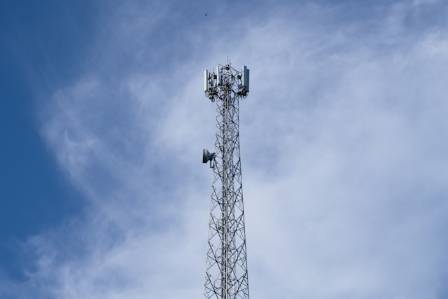
By 2025, telecommunication towers have become essential infrastructure, supporting worldwide connectivity through advanced 5G networks for smart urban systems, autonomous vehicles, and emergency response operations. The global telecom tower market is valued at $50.94 billion, expanding at a 4.22% CAGR, with over 4 million base stations operational across the Asia-Pacific region alone.
This article explores the inner workings of telecom towers, examining signal transmission, cutting-edge 5G technologies, eco-friendly initiatives, and safety measures. It is tailored for telecom engineers, policymakers, and technology enthusiasts seeking detailed insights. XH Tower, an ISO 9001:2015-certified manufacturer, provides state-of-the-art 5G-ready towers to meet modern connectivity demands.
Understanding Telecommunication Towers
Telecommunication towers, also referred to as cell towers or base stations, are engineered steel structures designed to send and receive radio frequency (RF) signals, enabling wireless networks spanning 2G through 5G. They divide regions into “cells,” typically providing coverage from 1–5 kilometers in densely populated areas and 50–70 kilometers in rural locations, maintaining seamless connectivity as users move between cells.
Different Types of Towers
Lattice Towers: Triangular or square steel frameworks, generally 200–400 feet tall, offering strong stability and high load-bearing capacity. These towers account for 42% of global installations.
Monopole Towers: Single-pole designs, 50–200 feet high, ideal for urban 5G small cell deployments due to their compact footprint.
Guyed Towers: Slim towers stabilized with wires, providing cost-effective coverage up to 20 kilometers in rural regions.
Stealth Towers: Disguised as trees, flagpoles, or other structures to meet urban aesthetics and zoning requirements.
Cells on Wheels (COWs): Mobile towers mounted on trailers, deployed within 30 minutes to 8 hours for emergencies or large events, such as restoring 90% network coverage in New York City after 9/11.
XH Tower specializes in ISO-certified lattice and monopole towers optimized for 5G. Its hybrid lattice-monopole design reduces urban footprint by 20% and installation costs by 15%, proven in recent Southeast Asian projects, giving telecom operators a competitive advantage.
How Towers Transmit Signals
Telecommunication towers operate through a multi-step process to enable wireless communication. Mobile devices transmit RF signals, ranging from 700 MHz for 4G to millimeter-wave (mmWave) frequencies for 5G, which are captured by tower antennas. Transceivers convert these signals into electrical data, transmitted via backhaul connections—fiber optics for urban speeds above 1 Gbps or microwave links delivering 50–500 Mbps in remote areas—to a mobile switching center. The center routes the data within milliseconds, ensuring uninterrupted handoffs.
Advanced 5G Capabilities
Massive MIMO: Uses 64–128 antennas to handle multiple simultaneous data streams, increasing 5G capacity by 40% and supporting up to 10,000 IoT devices per square kilometer.
Beamforming: Focuses RF signals on specific devices, improving efficiency by 30% in high-traffic areas such as stadiums or city centers.
Software-Defined Networking (SDN): Dynamically manages backhaul bandwidth, reducing latency by 20% for real-time services like video streaming or self-driving vehicles.
AI-driven dynamic spectrum allocation in 2025 optimizes 5G bandwidth by 15%, prioritizing high-demand applications such as IoT data streams. For example, Nokia’s Shanghai deployment employed beamforming and AI, boosting network speeds by 25% and handling 1 terabyte of data per hour, setting a benchmark for urban 5G networks.

Key Tower Components
Antennas: Sector or panel antennas provide directional coverage, with adjustable tilt to optimize reach from 1–70 kilometers.
Transceivers: Multi-band units process signals across 2G to 5G frequencies, ensuring interoperability.
Backhaul: Fiber optics deliver high-speed data in cities, while microwave links support remote connectivity.
Power Systems: Hybrid setups with solar and diesel maintain 99.9% uptime, vital for off-grid or emergency operations.
Faraday Cages: Protect electronics from electromagnetic interference, maintaining 5G signal integrity.
Foundations: Concrete slabs or piles, built to ASTM A123 galvanization standards, withstand winds up to 100 mph and adapt to local soil conditions.
XH Tower’s 5G monopoles come with pre-drilled mounts for Massive MIMO antennas, reducing setup time by 10%. 6G-ready antennas with holographic beamforming are being tested in 2025, aiming for ultra-low latency of 0.1 milliseconds for holographic communication applications.
Component Allocation
Tower components are proportioned for optimal performance: antennas (30%), transceivers (25%), backhaul (15%), power systems (15%), Faraday cages (10%), and foundations (5%). This ensures reliability and longevity across diverse environments.
AI and Smart Systems
In 2025, AI is transforming tower operations. IoT sensors track signal quality and structural health, reducing downtime by 20%. XH Tower integrates these smart sensors into ISO-certified towers, saving up to $1 million annually by detecting potential issues early. Predictive maintenance algorithms forecast equipment failures, improving 5G uptime by 25%, as shown in Southeast Asia.
Towers also function as edge computing centers, processing 1 terabyte of data per hour to support low-latency 5G applications like autonomous driving. AI-based dynamic spectrum allocation optimizes bandwidth use by 15%, prioritizing critical real-time IoT applications. XH Tower’s 5G-ready infrastructure supports these advancements reliably.
Sustainability in Tower Design
Eco-conscious design is central in 2025. XH Tower uses 40% recycled steel, cutting emissions by 15% across thousands of towers. Solar-powered systems in rural regions reduce CO₂ by 12% and diesel consumption by 20%, demonstrated in India’s 10,000-connection rural rollout.
Perovskite solar cells have boosted energy efficiency by 10% in 2025 trials, aligning with proposed LEED standards for telecom sites. XH Tower’s sustainable designs highlight its leadership in eco-friendly 5G infrastructure.
Safety and Regulatory Compliance
Tower safety is critical. RF radiation, labeled “potentially carcinogenic” by WHO, is safe below the FCC’s 0.6 mW/cm² limit. Worker hazards like falls and electrocution are mitigated through BIM and IoT monitoring, reducing accidents by 10%. XH Tower’s real-time vibration sensors improve worker safety by 15%.
Regulatory adherence includes FCC NEPA and NHPA environmental standards, plus FAA approval for towers over 200 feet or near airports. XH Tower ensures full compliance, providing secure and approved solutions worldwide.
Maintenance Practices
Routine maintenance extends tower lifespans to 20–30 years. Annual checks cover galvanization and structural integrity. Over 10,000 U.S. technicians in 2025 perform tasks like antenna calibration and cable upkeep. Drones reduce inspection costs by 10% and safety risks by 15%, particularly in remote locations.
AI-assisted maintenance schedules prioritize critical components, cutting downtime by 20%. This proactive approach ensures towers reliably support 5G networks for telecom providers and emergency responders.
Frequently Asked Questions
Q1: How do 2025 towers transmit signals?
Antennas receive RF signals, transceivers process them, and backhaul links route data, enhanced by 5G beamforming and SDN for optimal efficiency.
Q2: What are essential tower components?
Antennas, transceivers, backhaul, power systems, Faraday cages, and foundations maintain robust 2G–5G connectivity.
Q3: How do COWs differ from permanent towers?
COWs are portable, deployable in 30 minutes to 8 hours with 1–5 km coverage, compared to fixed towers’ 10–20 km range.
Q4: Are 2025 towers safe regarding radiation?
Yes, RF exposure remains below the FCC’s safety limit, with IoT sensors enhancing monitoring.
Q5: What maintenance is required?
Annual inspections, galvanization checks, and AI-assisted drone maintenance support 20–30-year service life.
Conclusion
Telecommunication towers in 2025 are critical to global networks, leveraging 5G technologies like Massive MIMO, beamforming, and AI-driven spectrum management for high-speed, low-latency service. Sustainable innovations, including recycled steel and advanced solar cells, reduce environmental impact, while IoT-enhanced safety systems ensure operational reliability. As 6G experiments aim for ultra-low latency, towers continue enabling smart cities and extending rural connectivity. XH Tower, with ISO 9001:2015-certified production and 5G-ready designs, provides dependable, forward-looking solutions for telecom providers worldwide.
पास की पत्तियाँ

दुनिया के 5 सबसे खूबसूरत बीच
चारु

8 Destinations Offering the Perfect Blend of Mountains and Beaches
Carol King

कुमुदनी का फूल अर्थ: प्रतीकवाद, रंग, और महत्व
लक्ष्य

टेनिस के इतिहास में सबसे ज़्यादा ग्रैंड स्लैम किसने जीते हैं?
माया

समुद्र के शांतिपूर्ण कैनवास
एलेना मॉरिसन

The Most Loved Beaches: A Trip Through America’s Waterfront Gems
Carl Allen