पत्ती
Mexican-ish: The Cross-Cultural Evolution of the Modern Burrito
When Meximodo debuted our menu , the response was overwhelmingly positive, with guests eager to experience our contemporary take on genuine Mexican gastronomy. Yet, one recurring question surfaced: “Why does a Mexican restaurant not feature burritos on the menu?”
Logan Nelson
लेखक
झलक
नीचे पूरा पाठ फ़्लोट करता है।
शेल्फ़
स्टोरी लीफ़
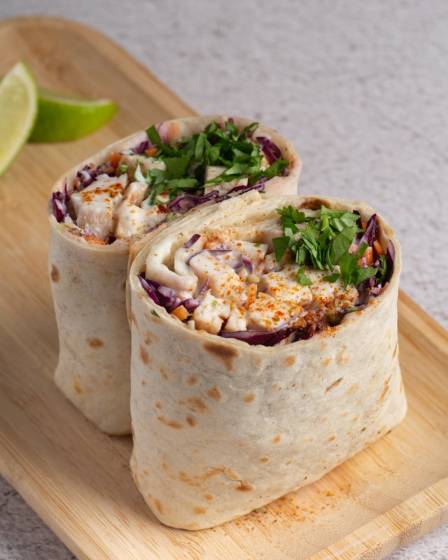
When Meximodo debuted our menu in November 2023, the response was overwhelmingly positive, with guests eager to experience our contemporary take on genuine Mexican gastronomy. Yet, one recurring question surfaced: “Why does a Mexican restaurant not feature burritos on the menu?”
So, does the burrito truly qualify as Mexican?
-
The brief answer: It is highly debatable, but they are not considered a traditional Mexican creation.
-
The detailed answer: Not entirely, but sort of. It ultimately comes down to definitions! While its roots most likely trace back to Mexico, the burrito is an Americanized adaptation of a Spanish-influenced food, born primarily out of practical convenience. In truth, the global burrito craze did not ignite until the 1950s, propelled by Southern California taquerias and—amusingly enough—the rollout of the frozen burrito in 1956.
Unwrapping the Origin Stories
Given how ubiquitous burritos are globally, it might surprise you to learn that their exact point of origin remains a mystery. Some culinary historians view them as a product of Tex-Mex innovation, while others believe they evolved as a niche variation of the taco during the Spanish conquest of Mexico.
In reality, the dish is likely a hybrid of multiple influences. While it is generally agreed that the burrito emerged in the early 20th century, various narratives compete. Gustavo Arellano, author of Taco USA: How Mexican Food Conquered America, lends the most credence to a specific scenario: the burrito was developed in the northwestern Mexican state of Sonora as a portable food solution in an era before automobiles. These early versions differed significantly from the massive, overstuffed wraps we see today; they were likely modest, tightly wrapped flour tortillas designed to transport leftovers.
Where did the name come from? It most likely derives from burros, the Spanish word for donkeys, which served as a primary means of transportation in 20th-century Mexico. The suffix "—ito" functions as an affectionate diminutive meaning "little." Some believe the food earned this moniker because its shape vaguely resembles a donkey's ear!
A Timeline of the Wrap
To understand the burrito's journey, we have to look back centuries:
10,000 BC (Mesoamerican Era): Indigenous populations were already utilizing corn tortillas as edible wraps for various ingredients. To this day, corn remains the gold standard for traditional tortillas.
Early 1500s (Spanish Colonization): Spanish settlers arrived in Aztec territories. While their attempts to establish wheat as a dominant crop failed in most regions, Sonora proved to be the exception. Because Spanish colonists preferred wheat, flour tortillas were born in this northern region.
The Portability Precedent: Aztec gastronomy leaned heavily on tortillas and tamales (steamed cornmeal shells stuffed with fillings), which offered a similar grab-and-go convenience. The Spanish introduced new ingredients to this framework, including beef, chicken, and cheese.
According to the Mexican restaurant chain Quesada, authentic Mexican burritos—which are still enjoyed in Mexico today—are notably slender and compact. They typically feature basic components like fish, meat, dairy, beans, rice, or chiles, but rarely all at once. Instead, a classic burrito contains just one or two fillings.
This style remained a regional specialty of Northern Mexico until migrant laborers, known as braceros, arrived in Southern California. Needing a quick, portable lunch, these workers favored the convenient wraps. Local eateries quickly adopted the concept, cementing it on their menus and sparking a culinary phenomenon.
The Rise of the Contemporary Burrito
The burrito truly entered mainstream global culture when innovator Duane R. Roberts invented the frozen burrito in 1956, building on his previous success supplying frozen beef patties to McDonald’s.
"Our burritos were flavorful, portion-controlled, and highly convenient," Roberts noted in an interview with Arellano. "Spoilage was never an issue—they boasted an extended shelf life, ready to be heated whenever needed."
This breakthrough introduced Mexican-inspired flavors to regions lacking local Mexican restaurants, particularly as public schools adopted frozen burritos as a streamlined lunch option for students. From there, the dish's popularity soared.
The massive burrito template we recognize today is actually the Mission burrito (or San Francisco burrito). Created at El Faro in San Francisco, this variation utilized an oversized tortilla packed to maximum capacity with meats, rice, beans, and an array of toppings. Eventually, chains like Chipotle capitalized on this style, successfully exporting the Mission burrito nationwide and introducing innovations like the burrito bowl to the American culinary lexicon.
The Verdict on Authenticity
While the modern incarnation has evolved far beyond its ancestral roots, it remains an undeniably brilliant culinary concept that has even won over diners within Mexico. However, this history explains why traditional Mexican establishments like Meximodo choose to omit them, along with fajitas—another classic example of a Mexican-inspired dish transitioning into a Tex-Mex staple.
As Arellano observed, "I have always maintained the biggest fans of Mexican food are Americans. Not Mexicans." Nevertheless, the burrito remains a legendary, deeply satisfying, and permanently "Mexican-ish" favorite.
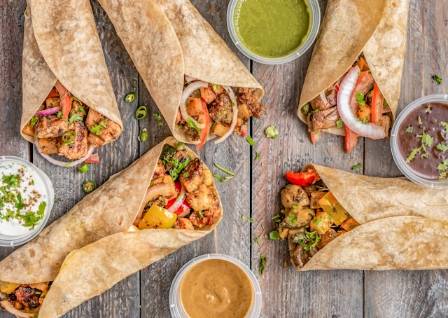
What to Explore on the Meximodo Menu Instead
We may skip the burritos, but we proudly showcase other timeless masterpieces:
Our Signature Enchiladas: A trio of corn tortillas packed with cheese, with your choice of savory chicken, seasoned chorizo, or grilled steak. They come finished with your choice of vibrant salsa verde or rich salsa roja, crumbled queso fresco, Mexican crema, white onions, and fresh cilantro.
The All-New Enmoladas: Prepared similarly to our enchiladas, this distinct variation swaps the traditional salsa for our deeply layered, house-made Mole Poblano sauce, completed with a dusting of toasted sesame seeds. It is an absolute staff favorite!
पास की पत्तियाँ

दुनिया की सबसे बेहतरीन सड़क यात्राएँ
पंकज

अपने यूरोपीय दौरे पर देखने के लिए 8 यूरोपीय वास्तुकला शैलियाँ
उर्वशी

अमेरिका में नंगी आँखों से तारों को देखने के लिए 13 सर्वश्रेष्ठ स्थान
ख्याति

अंतरिक्ष अन्वेषण में रचनात्मकता: एक अंतरिक्ष यात्री का चित्र बनाने के लिए शुरुआती मार्गदर्शिका
अजित मकवाना

मामला अध्ययन: बुर्ज खलीफा का इंजीनियरिंग चमत्कार
जय

पेड़ और झाड़ियाँ जो खारी मिट्टी और नमक के छींटों को झेल सकते हैं
मनीष