पत्ती
Manned Submersibles: Human Exploration of the Deep Ocean
Manned submersibles enable humans to reach the most inaccessible regions of the ocean. These specialized underwater vehicles allow a direct human presence in extreme marine environments, offering experiences and capabilities that other platforms, including larger submarines, cannot provide. Unlike full-sized submarines, submersibles generally have limited range and depend on a support ship for extended operations.
Reese Walker
लेखक
झलक
नीचे पूरा पाठ फ़्लोट करता है।
शेल्फ़
स्टोरी लीफ़
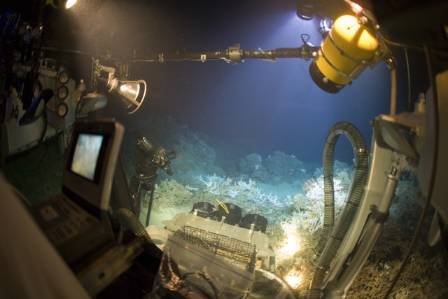
Manned submersibles enable humans to reach the most inaccessible regions of the ocean. These specialized underwater vehicles allow a direct human presence in extreme marine environments, offering experiences and capabilities that other platforms, including larger submarines, cannot provide. Unlike full-sized submarines, submersibles generally have limited range and depend on a support ship for extended operations.
Understanding Manned Submersibles
These vehicles are designed to endure the immense pressures found at great ocean depths. Their primary defense against crushing forces is a strong pressure hull, often shaped as a sphere or cylinder, which efficiently distributes external stress. Materials such as high-strength steel or titanium alloys are commonly used due to their exceptional resistance to compression.
Inside the pressure hull, the internal environment is maintained at near-surface atmospheric pressure, ensuring human safety. Sophisticated life support systems provide a continuous supply of oxygen while removing carbon dioxide. Oxygen can be stored in pressurized tanks or produced onboard through electrolysis of purified seawater. Carbon dioxide is removed using chemical scrubbers, which react with CO2 to prevent toxic buildup. These systems also regulate temperature and humidity, maintaining a stable and comfortable cabin environment.
Movement and depth control are achieved through propulsion and buoyancy mechanisms. Propulsion is typically provided by electric motors driving propellers or pump-jets, powered by onboard batteries. Buoyancy control relies on ballast tanks, which can be filled with water to increase density and descend, or purged with compressed air to ascend. Fine adjustments can be made using variable ballast tanks, while fixed ballast may be jettisoned in emergencies to guarantee ascent.
Applications of Manned Submersibles
Manned submersibles serve a variety of purposes, enabling hands-on observation and interaction with deep-sea environments. Scientific research is a major use, allowing marine biologists, geologists, and oceanographers to investigate ecosystems, hydrothermal vents, and geological formations. They facilitate direct sampling and in-situ experiments, providing data beyond the reach of surface vessels or autonomous systems.
Exploration missions rely on human submersibles to venture into previously unseen areas of the ocean. The ability for humans to observe, interpret, and respond to unexpected phenomena in real time provides flexibility unmatched by remotely operated or automated vehicles. Direct human decision-making is critical when research plans must adapt to new discoveries.
Commercial applications include underwater construction, where submersibles assist with installing or maintaining subsea infrastructure, cable deployment, and salvage operations, such as recovering lost equipment or sunken artifacts. Human precision and dexterity make these tasks feasible at depths that challenge robotic systems.
Deep-sea tourism has also emerged, offering individuals the opportunity to experience underwater realms firsthand. Companies have developed submersibles with pressure-controlled cabins, allowing passengers to safely observe marine life and submerged landscapes. These varied applications highlight the essential role of manned submersibles in expanding our knowledge and engagement with the ocean.
Notable Manned Submersibles
The Bathyscaphe Trieste is a historically significant vessel, famous for its record-setting dive to the Challenger Deep in 1960, the deepest part of the world’s oceans. This pioneering mission proved that humans could survive extreme oceanic pressures, paving the way for future deep-sea exploration.
Alvin, operated by the Woods Hole Oceanographic Institution and owned by the U.S. Navy, is another iconic submersible. With more than 5,000 dives, Alvin is renowned for exploring hydrothermal vents and the wreck of the Titanic. Its durable design and ongoing upgrades allow it to carry a crew of three to depths of 4,500 meters, making it a versatile scientific platform.
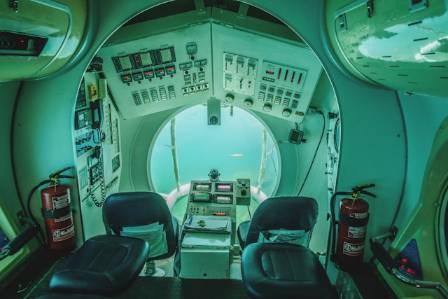
Modern submersibles like the Triton 36000/2, designed by Triton Submarines, showcase advances in personal exploration and deep-sea tourism. Its transparent acrylic sphere offers occupants a panoramic view, enhancing both scientific observation and leisure experiences.
The Ictineu 3, designed for scientific missions, can operate to a depth of 1,200 meters. It features a dual-sphere stainless steel pressure hull with a large acrylic viewing window, providing exceptional visibility. These vessels, from historical milestones to contemporary designs, illustrate ongoing innovation in submersible technology.
Ensuring Safety in the Deep
Operating manned submersibles involves overcoming extreme environmental challenges, primarily high hydrostatic pressure. At several kilometers beneath the surface, external pressure can exceed 1,000 times atmospheric pressure, necessitating strong materials like high-strength steel or titanium and precise construction techniques to avoid structural failure.
Reliable life support is crucial, providing oxygen and removing carbon dioxide for the entire duration of a dive, which may last hours or even days. Continuous monitoring of cabin oxygen levels, CO2 concentration, temperature, and humidity is essential to maintain a safe atmosphere.
Communication is limited underwater because radio waves do not propagate well through water. Acoustic communication systems are commonly used, though they are slower and less reliable than surface-based systems. This necessitates careful pre-dive planning, strict operational protocols, and the ability for the crew to operate independently.
Manned submersibles undergo rigorous testing and certification to meet international safety standards, including ASME PVHO-1 and Germanischer Lloyd requirements. These standards ensure precise tolerances for pressure hulls and onboard systems. Crew members receive extensive training and participate in simulations and emergency drills to prepare for potential contingencies. The combination of advanced engineering, thorough testing, and highly trained personnel ensures that manned submersibles operate safely in the deep ocean.