← होम स्पेस4 मि.
पत्ती
Beyond Mars: Exploring Other Fascinating Worlds in Our Solar System
With the recent launch of three Mars missions, including NASA’s Perseverance rover searching for signs of life, our focus on the Red Planet is intensifying. And it makes sense—Mars is the most viable extraterrestrial destination for humans in the near future. Scientifically, it’s also intriguing. Suniti Karunatillake, a planetary scientist at Louisiana State University, highlights that Mars is the only rocky planet besides Earth exhibiting key geological processes like volcanic activity, sedimentary rock formations, and polar ice caps.
R
Raj
लेखक
झलक
नीचे पूरा पाठ फ़्लोट करता है।
शेल्फ़
स्टोरी लीफ़
With the recent launch of three Mars missions, including NASA’s Perseverance rover searching for signs of life, our focus on the Red Planet is intensifying. And it makes sense—Mars is the most viable extraterrestrial destination for humans in the near future. Scientifically, it’s also intriguing. Suniti Karunatillake, a planetary scientist at Louisiana State University, highlights that Mars is the only rocky planet besides Earth exhibiting key geological processes like volcanic activity, sedimentary rock formations, and polar ice caps.
However, this intense fixation on Mars may be diverting attention from other compelling celestial bodies. A continuous cycle of discoveries and investments keeps fueling interest in Mars, leaving many other promising worlds underexplored. While Mars remains crucial, expanding our focus could unlock extraordinary findings elsewhere in our solar system.
Here are five alternative destinations worth deeper exploration:
Venus: Earth’s Harsh Twin
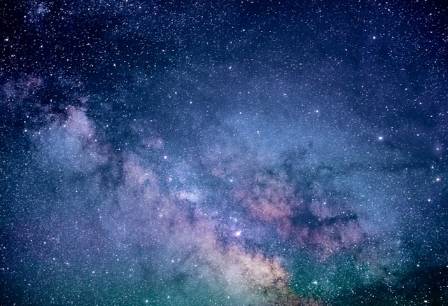
Venus serves as a cautionary tale of what Earth could have become under different conditions. Despite similarities in size, mass, and geological history, Venus took a vastly different turn. Its thick atmosphere, composed mainly of carbon dioxide, creates extreme surface pressure—equivalent to being 3,000 feet underwater—while temperatures soar above 460°C, hotter than Mercury. A runaway greenhouse effect has made the planet incredibly hostile.
Studying Venus is challenging due to its dense, sulfuric acid clouds, which obstruct visibility, and extreme surface conditions that quickly disable landers. The last major missions include ESA’s Venus Express (2005) and the Soviet Union’s Vega landers (1985). However, renewed interest has led to proposals like DAVINCI+ (an atmospheric probe) and VERITAS (an orbiter for surface mapping). If approved, one of these missions could launch later this decade.
Ceres: A Dwarf Planet with Hidden Potential
Ceres, the largest asteroid in the solar system, is classified as a dwarf planet. Despite its asteroid status, its geological features are striking. Scientists suspect it harbors an icy crust, a possible subsurface salty ocean, and even cryovolcanoes—volcanoes that spew ice and salt instead of lava. The presence of organic compounds suggests it may have once been habitable, or even hold potential for life today.
NASA’s Dawn spacecraft provided the first close-up study of Ceres between 2015 and 2018, and researchers are still analyzing its data. Interest in follow-up missions is growing, with proposals like Calathus, which aims to collect samples from Occator Crater to assess Ceres’ habitability.
Europa: A Prime Candidate for Life
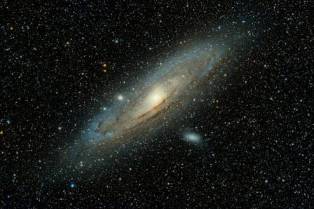
Jupiter’s moon Europa is one of the most promising locations for extraterrestrial life. Beneath its icy crust lies a vast ocean, possibly kept warm by tidal forces. Scientists speculate that, much like deep-sea hydrothermal vents on Earth, Europa’s ocean could sustain life. The presence of clay-like minerals linked to organic matter further fuels this possibility.
Although Europa has been observed through spacecraft flybys—most notably the Galileo probe from 1995 to 2003—there hasn’t been a dedicated mission to explore it in detail. That’s set to change with two upcoming missions: ESA’s JUICE, launching in 2022, which will conduct two flybys of Europa, and NASA’s Europa Clipper, scheduled for 2024. The latter will perform around 45 flybys, using advanced instruments to analyze Europa’s surface and subsurface. If life exists there, Clipper could provide the evidence we need.
Titan: A World of Alien Chemistry
Saturn’s largest moon, Titan, stands out as the only moon with a dense nitrogen-rich atmosphere, resembling Earth’s. It also features lakes—but unlike Earth’s, these are filled with liquid methane instead of water. Scientists speculate that some form of primitive life might adapt to such conditions, metabolizing hydrogen and exhaling methane rather than carbon dioxide.
Titan has intrigued scientists for decades, with key insights coming from NASA’s Cassini spacecraft and its Huygens lander, which touched down in 2005 but lasted only 90 minutes. To unlock more secrets, NASA is planning Dragonfly, a drone mission set to launch in 2026. This rotorcraft will explore Titan’s landscape, analyzing its chemistry and potential for life.
Pluto: A Frozen Yet Active World
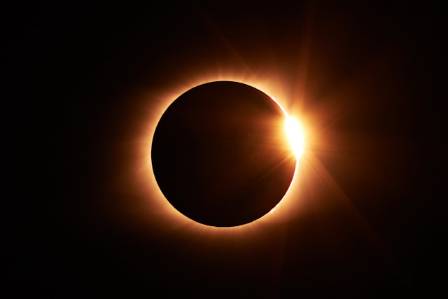
Once classified as the ninth planet, Pluto remains one of the most enigmatic bodies in our solar system. Despite its frigid environment, evidence suggests it might harbor a subsurface ocean beneath its nitrogen-ice crust. Unexpected geological activity and the presence of organic molecules hint at complex processes shaping this distant world.
NASA’s 2015 New Horizons flyby revealed Pluto’s dynamic surface, but further exploration is needed. Future missions could offer insights into the Kuiper Belt, the region where Pluto resides, and its potential for sustaining active celestial bodies despite their great distance from the Sun.
Expanding Our Horizons
While Mars continues to capture our imagination, these alternative destinations offer equally compelling scientific opportunities. Exploring them further could reshape our understanding of planetary evolution, habitability, and even the search for life beyond Earth. As space agencies plan the next wave of missions, a broader focus could yield groundbreaking discoveries across the solar system.
पास की पत्तियाँ
hi
कुमुदनी का फूल अर्थ: प्रतीकवाद, रंग, और महत्व
लक्ष्य
hi
संयुक्त राज्य अमेरिका की 10 सबसे ऊंची इमारतें
बलराम

hi
दुनिया की सबसे बेहतरीन सड़क यात्राएँ
पंकज

hi
पक बैटल: माइंडसेट, टेक्निक और कैसे बेहतर करें
वरुण

hi
20 सर्वश्रेष्ठ और सबसे प्रसिद्ध AI तकनीकें यहाँ सूचीबद्ध हैं।
इंद्रजीत

en
Roses: Timeless Beauty
Sydney Clark