पत्ती
The greatest station wagons ever
SUVs have become the dominant choice for families, outselling large four-door sedans and turning the humble station wagon into a rare sight. While some wagons are still available, many manufacturers now choose not to bring their estate models to certain markets.
Luke Dean
लेखक
झलक
नीचे पूरा पाठ फ़्लोट करता है।
शेल्फ़
स्टोरी लीफ़
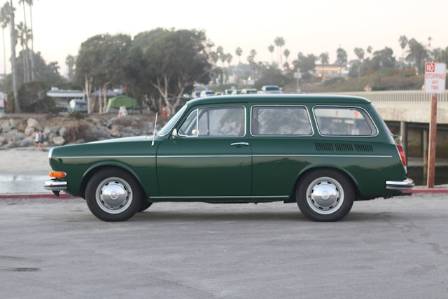
SUVs have become the dominant choice for families, outselling large four-door sedans and turning the humble station wagon into a rare sight. While some wagons are still available, many manufacturers now choose not to bring their estate models to certain markets.
Yet, station wagons—or estates, as they’re called in some regions—once ruled the roads, perfect for carrying families and all their gear. We all remember packed summer trips, wagons overloaded with people, pets, luggage, bikes, surfboards, and sometimes even a mischievous kid perched on the roof rack. To honor these practical yet stylish vehicles, here’s a look at ten of the greatest wagons ever made.
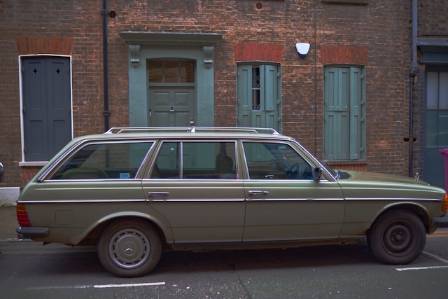
Mercedes-Benz S123 Estate
A classic, the S123 combined luxury, comfort, and practicality, creating a blueprint for Mercedes estates. Debuting at the 1977 Frankfurt Motor Show, it was Mercedes’ first station wagon.
Built on the W123 sedan platform, it offered the same refinement as its sedan and coupe counterparts, while carrying a generous load. Production started in 1978, and demand quickly outpaced supply. The 280TE variant featured Mercedes’ reliable 2.8-litre inline-six (M110) with 136kW and reached 210 km/h, making it the world’s fastest and priciest wagon of its era.
By 1985, nearly 200,000 “T” models were built (with ‘T’ standing for Tourismus und Transport). A notable first New York owner was John Lennon, who used a diesel 300TD to carry his music equipment—the last car he ever owned.
BMW M5 (E34) Touring
BMW’s E34 M5 Touring is an iconic hot wagon, the first from BMW’s M division. Its 3.8-litre inline-six (S38) produced 250kW and 400Nm, sprinting to 100 km/h in 5.9 seconds with a top speed of 250 km/h (electronically limited).
Extremely rare, only 891 units were made between 1992-1995. Interestingly, it was the last M car to be fully hand-built, with each vehicle taking two weeks to complete.
Chevrolet Bel-Air Nomad (1955-57)
The first-generation Bel-Air Nomad combined flashy styling with a practical two-door wagon body. Designed by Harley Earl, it featured chrome trim, full wheel covers, and a carpeted interior.
The 265ci V8 produced 121kW, while the Power Pack boosted it to 134kW. By its final year, a fuel-injected 283ci V8 delivered 211kW. Despite its iconic looks, production lasted only three years before a more conventional four-door layout replaced it in 1958.
Fun fact: In the 1980s TV show MacGyver, Angus MacGyver drove a teal-and-white Nomad Sport Wagon.
Buick Roadmaster Estate
The Roadmaster Estate epitomized American excess with its massive 5,530mm length and signature wood-panel styling. Engines ranged from a 5.0-litre V8 producing 127kW to a Corvette-derived 5.7-litre LT1 V8 producing 194kW by 1994.
Seating up to eight, towing 3,175kg, and comfortable for long trips, the Roadmaster remained a family favorite until production ended in 1996. It, along with the Chevy Caprice Estate, were the last full-size wagons in the US until the Dodge Magnum in 2005.
Holden Commodore Sportwagon
Australia’s Holden offered a stylish alternative for families with the VE Commodore Sportwagon (2008), featuring sleek, sporty lines unlike previous boxy generations. The SS V8 variant made it particularly desirable.
Despite its appeal, consumer preference shifted to SUVs, reducing wagon sales. Fun fact: Holden entered a VE Sportwagon in the 2008 Bathurst 12 Hour before it was on sale, where it retired after 90 minutes due to brake failure.
Volvo 245 Estate
Boxy yet beloved, the Volvo 245 Estate was built for nearly 20 years. Despite its unconventional looks, it was exceptionally safe, featuring collapsible steering columns and strategically placed fuel tanks.
Turbocharged variants introduced in 1981 made it surprisingly quick, while nearly a million 245s were produced between 1974 and 1993. The 240 series was even recognized by the US Insurance Institute for Highway Safety as the safest car available years after its debut.
Audi RS2 Avant
The RS2 Avant started Audi’s RS line, co-developed with Porsche. Based on the Audi 80, it featured a turbocharged 2.2-litre inline-five, tuned by Porsche to 232kW and 410Nm, sprinting to 100 km/h in 4.5 seconds—faster than a 1994 911 Carrera.
Porsche also manufactured the car at its Zuffenhausen plant, including the iconic 17-inch wheels from the 964 Turbo. The RS2 remains the ultimate “sleeper” wagon.
Citroën DS Break
The DS Break, debuting in 1958, combined futuristic design with practicality. Seating six (or eight with folding jump seats), it featured a spacious cargo area, a single-spoke steering wheel, and hydropneumatic suspension for a smooth ride.
Variants included ambulances and commercial models. Fun fact: The DS Break was used by the BBC as a Roving Eye camera car due to its stability.
Volvo 850R Estate
Volvo shed its conservative image with the 850R Estate. Powered by a 2.3-litre turbo inline-five co-developed with Porsche, it delivered 186kW and 350Nm. Manual models hit 100 km/h in 6.7 seconds.
Initially launched as a limited 850 T-5R edition in 1995, it became the 850R in 1996 before being replaced by the V70R. Racing versions were campaigned in the 1994 British Touring Car Championship.
Audi RS6 Avant
The RS6 Avant is the ultimate wagon, with a turbocharged V8 producing 441kW and 800Nm. It reaches 100 km/h in 3.6 seconds and hits 200 km/h in 12 seconds, with an electronically limited top speed of 250 km/h (unlockable to 305 km/h).
Despite its performance, it retains the understated appearance of a family wagon, proving that wagons can be thrilling. Only the doors, roof, and tailgate are shared with the standard A6 Avant—the rest is uniquely RS6.