← होम स्पेस4 मि.
पत्ती
A Guide to Core Anime & Manga Drawing Techniques
Learning to draw in the anime and manga style involves mastering a set of distinctive conventions for portraying characters, expressions, and actions. These conventions simplify and stylize reality to create appealing and emotionally resonant artwork. The following guide outlines fundamental techniques across key areas, serving as a foundation for beginners and a reference for practicing artists.
L
Lucas
लेखक
झलक
नीचे पूरा पाठ फ़्लोट करता है।
शेल्फ़
स्टोरी लीफ़
Learning to draw in the anime and manga style involves mastering a set of distinctive conventions for portraying characters, expressions, and actions. These conventions simplify and stylize reality to create appealing and emotionally resonant artwork. The following guide outlines fundamental techniques across key areas, serving as a foundation for beginners and a reference for practicing artists.
Drawing the Anime Face and Head
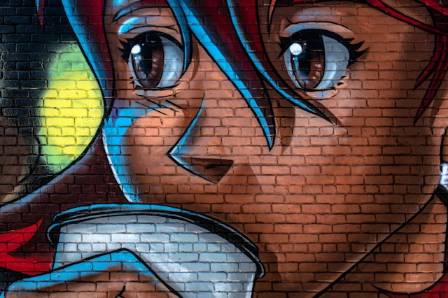
The face is the focal point of character expression. Mastering its structure is essential.
Basic Proportions:
-
The head is often drawn as an oval or circle, with a guideline down the center for symmetry.
-
The eyes are typically placed on the horizontal midline of the head.
-
The distance between the eyes is usually about the width of one eye.
-
The bottom of the nose is roughly halfway between the eyes and the chin, with the mouth situated slightly above the halfway point between the nose and chin.
Facial Features:
-
Eyes: Large, expressive eyes are a hallmark. They are constructed with a curved upper eyelid, a sharp or rounded lower lid, a large iris/pupil, and bright catchlight reflections.
-
Nose and Mouth: Often simplified to minimal lines or shapes. The nose might be a simple "L" shape or two dots from the front, and a single curved line from the side. The mouth is usually a short, soft line.
-
Ears: Positioned between the eyebrow and nose lines. Their complexity can vary from a simple "C" shape to more detailed inner folds.
Drawing Anime Hair
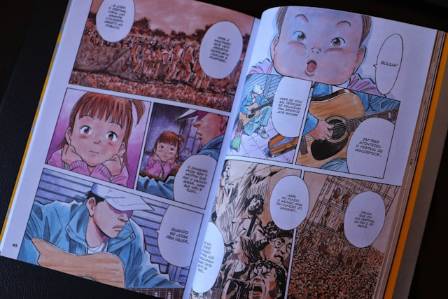
Hair is a key element for style and personality, drawn in distinct, clumped shapes rather than individual strands.
Core Principles:
-
Start by defining the hairline and the basic shape of the hairstyle (e.g., a mass for short hair, flowing sections for long hair).
-
Draw the hair in large, clumped sections or "spikes" that follow the head's curvature.
-
Hair has volume; it should not lie flat against the scalp. Leave space between the scalp guideline and the start of the hair.
-
For long hair, use flowing, rhythmic lines to suggest movement and weight.
Drawing Anime Eyes and Expressions
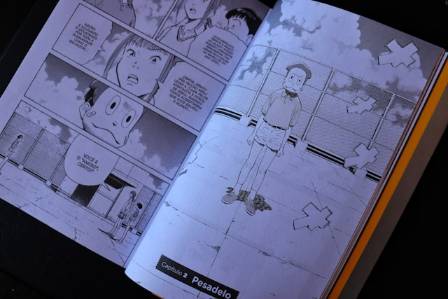
Eyes are the primary conveyors of emotion. Subtle changes dramatically alter the mood.
Common Expressions:
-
Happy/Eyes: Larger, brighter irises, pronounced highlights, and upward-curving lower eyelids.
-
Angry Eyes: Sharply slanted eyebrows inward, narrowed eyelids, and smaller pupils. The top eyelid may press down on the iris.
-
Sad Eyes: The eyebrows tilt inward and upward at the inner corners. The eyelids may droop, and highlights can be less bright.
-
Surprised/Shocked Eyes: Widely opened, with the iris not touching the eyelids. Eyebrows are raised high.
-
Determined/"Cold" Eyes: Sharp, focused gaze, often with strong shadows or narrowed eyelids. Highlights may be minimal or stark.
Drawing the Anime Body and Poses
While stylized, the body follows basic proportional rules and gesture.
Basic Proportions:
-
A common baseline is a head-to-body ratio of 1:6 or 1:7 for older teen/adult characters.
-
The shoulders are typically about 2 heads wide for males and 1.5 heads wide for females.
-
The elbows align with the waist, and the wrists align with the crotch when arms are at the sides.
Drawing Poses:
-
Start with a simple stick figure or line of action to capture the pose's flow and balance.
-
Build up the figure using basic 3D shapes (ovals, cylinders) for the chest, pelvis, and limbs.
-
Pay attention to weight distribution and how joints bend. Avoid stiff, symmetrical poses in favor of dynamic, natural stances.
Drawing Anime Clothing and Details
Clothing should follow the form of the body beneath it and react to movement.
Key Concepts:
-
Folds and Wrinkles: Draw where fabric is pulled (like at joints), pinched (where it's gathered), or hanging loose. Common folds include pipe folds, zigzag folds, and spiral folds around limbs.
-
Consistency: Ensure clothing details (like seams, patterns, and accessories) are consistent with the character's design and the scene's perspective.
-
Simple Start: Begin by drawing the basic shape of the clothing item over the body, then add details and folds.
Essential Tips for Beginners
-
Use References: Constantly study real people, anatomy, and fabrics, then translate them into the anime style.
-
Practice Fundamentals: Dedicate time to drawing basic shapes, forms, and perspective. Strong fundamentals make stylization easier.
-
Break It Down: Always deconstruct complex drawings into simple shapes and guidelines first.
-
Be Patient: Style develops over time through consistent practice and study.
Mastering anime drawing is a gradual process of learning these conventions and then infusing them with your own artistic sensibility. Regular practice focused on these core areas—face, expression, hair, body, and clothing—will build the necessary skills to create compelling original characters and scenes.
पास की पत्तियाँ

en
Tibetan Antelope: Adaptations, Threats, and Conservation
Julian Frost

hi
मामला अध्ययन: बुर्ज खलीफा का इंजीनियरिंग चमत्कार
जय

hi
आप मिल्की वे को कहाँ देख सकते हैं? – दुनिया की 10 बेहतरीन जगहें
इन्द्रेश

hi
एक नदी की 10 भूमिकाएं: हमारे जलमार्ग से परे
मौहन
hi
समुद्र का सरल चित्र बनाने की मार्गदर्शिका: पेंसिल से समुद्र का आसान दृश्य बनाना
पूजा सिंह
hi
अपने घर में कला के साथ कैसे सजाने के लिए
कायला