पत्ती
Artificial intelligence in space
Artificial intelligence (AI) is increasingly discussed across science and society. Some see it as a transformative technology that can improve many aspects of life, while others worry about its risks. In the field of space exploration, the key question is how AI can be used safely, effectively, and responsibly.
Emma Blake
लेखक
झलक
नीचे पूरा पाठ फ़्लोट करता है।
शेल्फ़
स्टोरी लीफ़
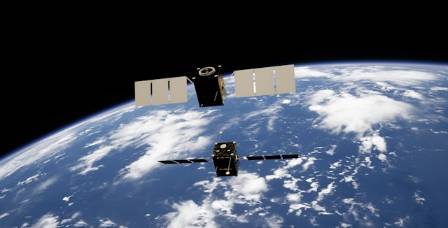
Artificial intelligence (AI) is increasingly discussed across science and society. Some see it as a transformative technology that can improve many aspects of life, while others worry about its risks. In the field of space exploration, the key question is how AI can be used safely, effectively, and responsibly.
What Is Artificial Intelligence?
Artificial intelligence refers to the ability of machines—such as computers or robots—to imitate human cognitive abilities. This includes tasks like analyzing information, making decisions, and recognizing patterns.
A major method used today is machine learning, where systems improve automatically by processing large amounts of data. Instead of being explicitly programmed for every task, the system learns from examples and adjusts its behavior over time.
A more advanced form is deep learning, which uses layered neural networks inspired by the human brain. These systems can handle complex tasks such as image recognition and language translation. Depending on the method, learning can be:
Supervised learning, where the system learns from labeled examples
Unsupervised learning, where it discovers patterns without guidance
Common applications include navigation systems, translation tools, and chat-based AI assistants.
AI in Space Technology Today
AI is already widely used in modern space missions. It helps manage satellite networks, analyze large volumes of data collected from space, and even process information directly onboard spacecraft.
Space agencies are increasingly using AI because satellites now generate enormous datasets that are too large for manual processing alone. AI systems help automate analysis and improve efficiency.
The European Space Agency (ESA), through its research and innovation programs, is actively exploring how AI can make satellites more autonomous, responsive, and intelligent.
ESA Research and Innovation Projects
In 2022, ESA funded multiple experimental projects under initiatives focused on “cognitive cloud computing in space.” These studies explored how AI could be integrated into satellites and spacecraft.
Some projects focused on Earth applications, such as:
Detecting methane leaks
Monitoring environmental disasters
Improving climate observation systems
Others explored space exploration, including:
Smarter lunar rovers
Autonomous spacecraft navigation
Cooperative satellite swarms
Another area of research involved managing large satellite constellations. As satellite networks grow, they require frequent coordination, including collision avoidance and system updates. AI is being developed to automate many of these tasks.
ESA’s experimental satellite platform OPS-SAT has also been used to test AI systems directly in orbit, including image processing, navigation control, and autonomous decision-making.
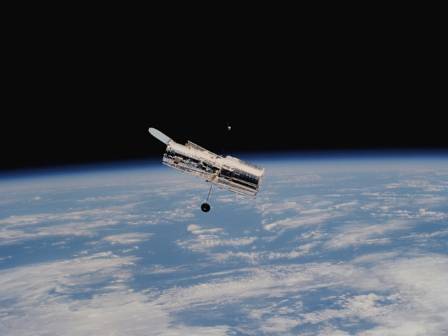
AI for Earth Observation and Environmental Monitoring
AI plays a major role in analyzing Earth observation data. One major application is detecting marine pollution.
ESA-funded projects have used machine learning to identify floating plastic waste, track debris in oceans, and combine satellite and drone data for environmental monitoring.
AI is also being used to improve image processing from satellites, detect changes on Earth’s surface, and support climate research.
Autonomous Navigation and Swarm Intelligence
One of the most important uses of AI in space is autonomous navigation. This allows spacecraft to operate without constant instructions from Earth.
Research has explored how spacecraft could navigate unknown environments using machine learning. The goal is to reduce reliance on ground control and improve mission flexibility.
A related concept is swarm intelligence, where groups of small robots or satellites share information. If one unit learns something useful, the entire network can adapt. This is sometimes referred to as “hive learning.”
AI in Space Missions and Operations
AI is already being integrated into real missions. For example:
Rovers can autonomously avoid obstacles
Satellite data downloads can be automatically scheduled
Astronaut assistants use AI to support daily tasks on the International Space Station
ESA’s planetary defense mission Hera is designed to use AI for autonomous navigation near asteroids, similar to self-driving technology on Earth. It will interpret sensor data onboard and make decisions in real time.
Because satellites must increasingly avoid space debris, AI is also being used for collision avoidance and orbital safety management.
Global Space Agencies Using AI
Many space agencies around the world are developing AI systems for space exploration.
Germany (DLR)
The German Aerospace Center has developed AI systems for both Earth and space missions. It also created astronaut assistance technology such as the CIMON robot, which can see, speak, and interact with crew members aboard the International Space Station.
United States (NASA)
NASA uses AI in many areas, including mission planning, spacecraft operations, and scientific research. AI has improved image processing of solar data and helped discover new exoplanets by analyzing telescope data.
NASA also collaborates with industry partners to improve communication systems and make spacecraft more autonomous.
Japan (JAXA)
The Japanese space agency has integrated AI into launch systems and robotic assistants. It has developed intelligent systems for monitoring rocket performance and assisting astronauts with tasks in orbit.
Europe and Other Agencies
Other organizations have also adopted AI technologies:
French space agency CNES uses AI for launch optimization
The UK Space Agency applies AI to analyze satellite images for archaeological research
The Italian Space Agency supports AI-based companies and innovation projects
AI in Space Navigation and Earth Systems
AI is also improving satellite navigation, space weather forecasting, and Earth-based applications such as traffic monitoring and environmental analysis.
One major ESA initiative is the development of a Digital Twin of Earth, a continuously updated simulation of the planet powered by satellite data and AI models. This system can help predict environmental changes and support decision-making.
AI is also used in monitoring transportation systems, climate trends, and infrastructure activity by analyzing satellite imagery at scale.
Conclusion
Artificial intelligence is becoming a central technology in space exploration. It already supports satellites, rovers, and astronaut operations, and its role is rapidly expanding.
By improving autonomy, data analysis, and decision-making, AI helps spacecraft operate more efficiently and safely. At the same time, space agencies are carefully studying how to ensure these systems remain reliable and secure.
As technology advances, AI is expected to play an even greater role in exploring space, managing Earth observation systems, and enabling future missions beyond our planet.
पास की पत्तियाँ

7 Stunning Scenic Spots Along the Amalfi Coast You Can't Skip
Owen Brooks

Fascinating Facts About the World of Crabs
Frederick Louis Kingsley
How Do Telecommunication Towers Work
Emery Clark

1994 सुपरट्यूनर शोडाउन: आफ्टरमार्केट मॉन्स्टर्स
श्रेयस्

दुनिया के टॉप 10 सबसे अमीर शहर
सुमन

कला और प्रौद्योगिकी के प्रतिच्छेदन की खोज करने वाले 5 दृश्य कलाकार
केयूर